Welcome to my Autism Guide for the Newly Diagnosed Adult.
Autism, or Autism Spectrum Disorder (ASD), is a lifelong neurological difference that affects how a person communicates, processes sensory information, and interacts socially. It presents differently in everyone, with strengths and challenges unique to each individual.
Receiving an autism diagnosis in adulthood often comes with feelings of alienation, regret, anger, and grief. Many adults who receive a late diagnosis have spent years misunderstanding themselves and being misunderstood. Emphasis has been given to autistic voices whenever possible, centering the perspectives of those with lived experience throughout this guide.
The goal of this guide is to ease the journey of self-discovery such a diagnosis inevitably leads to, while providing the validation and community connection late diagnosed autistic adults have often lacked throughout their lives.
Emphasis has been given to autistic voices whenever possible. You’ll find medical reference books and databases meant to provide a variety of primary source research materials on autism as a medical diagnosis. You’ll also find support networks, community hubs, and books about the autistic experience written by autistic people.
The resources included here focus on up-to-date research, personal experiences, advocacy, and practical support. Whether you are just starting to learn about autism or are seeking deeper understanding and community connection, this guide aims to provide reliable, accessible, and inclusive materials.
Throughout this guide, I’ll use identity first language. This is my personal preference as an Autistic Woman, and is in no way intended to make a statement or invalidate the preferences of others.
Books
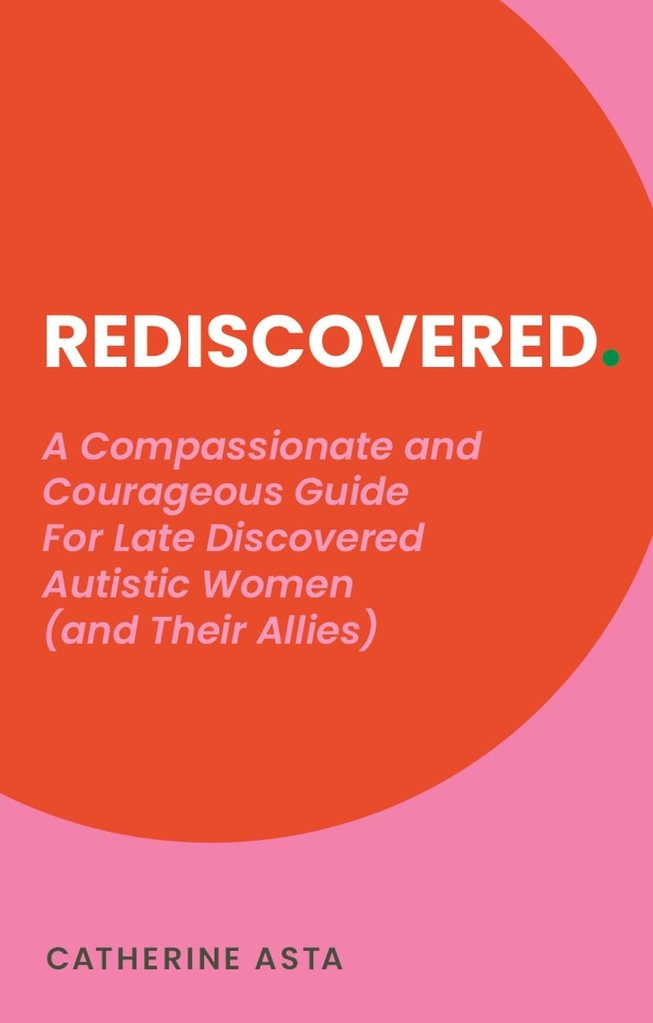
Rediscovered: A Compassionate and Courageous Guide for Late Discovered Autistic Women
Asta, C. (2025). Rediscovered: A compassionate and courageous guide for late discovered autistic women (and their allies). Jessica Kingsley Publishers.
Catherine Asta is a late diagnosed autistic woman, psychotherapist, and the host of the hit podcast The Late Discovered Club dedicated to sharing the stories of late diagnosed autistic women, building community, and networking worldwide.
Asta combines her own experiences with the experiences of 100 other autistic women to create a guide to autistic womanhood from relationships to menopause.
Autistic women are more likely to be misdiagnosed than their male autistic peers. Some research indicates that up to 80% of autistic women are still undiagnosed by age 18 (UCLA Health, 2024).
This book may be of interest to late-diagnosed Autistic Women, their friends and family seeking to gain a better understanding of the autistic experience through the lens of womanhood. Late-diagnosed Autistic Women may find this book helpful while exploring autism as a new facet of their identity.
This resource’s front matter includes a table of contents, acknowledgments, and an introduction. It is organized into standard chapters with descriptive headings.
This resource was found on the New Non-Fiction Releases shelf at the Deerfield Public Library.
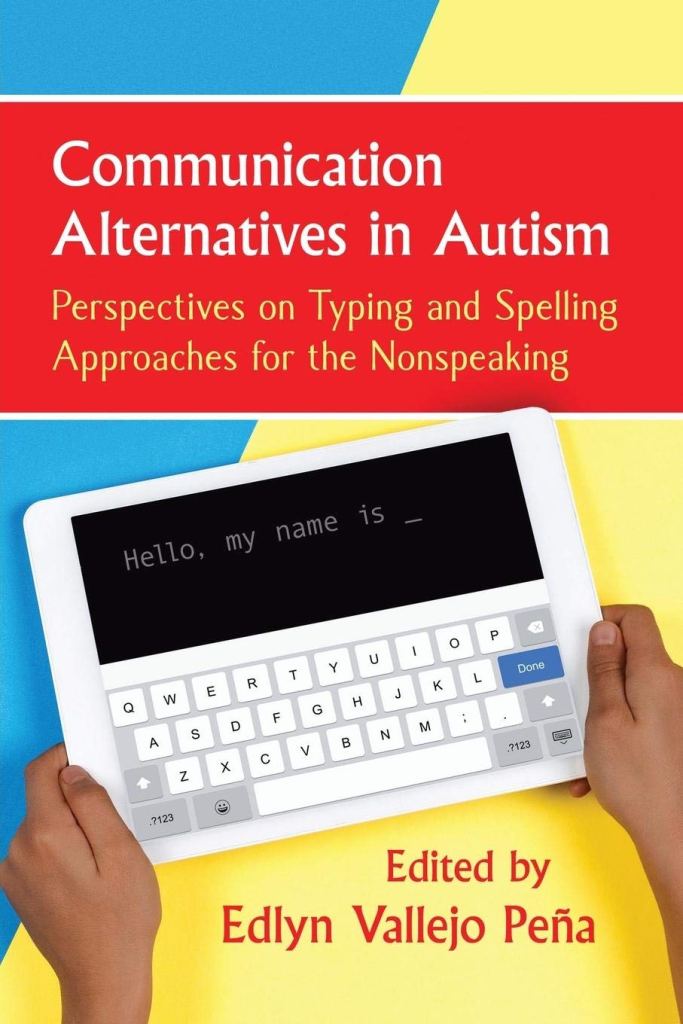
Peña, E. V. (Ed.). (2019). Communication alternatives in autism: Perspectives on typing and spelling approaches for the nonspeaking. Toplight Books.
Communication Alternatives in Autism: Perspectives on Typing and Spelling Approaches for the Nonspeaking, published in 2019, is an edited anthology of firsthand accounts written by nonverbal autistic individuals on their experiences with various communication methods, including controversial methods such as the rapid prompting method (RPM) and facilitated communication (FC).
This book is a valuable firsthand collection on alternative communication and disability rights, with a conclusion that covers best practices for educators written by an expert in the field of education. It is an excellent guide for educators, especially considering the conclusion, as well as a window into the lived experiences of nonspeaking autistic individuals. It can be used to increase understanding and empathy, and to advance disability rights.
Contributors to this collection include Tracy Thresher, Larry Bissonnette, Amy Sequenzia, Ido Kedar, Samuel Capozzi, Dillan Barmache, Henry Frost, Emma Zurcher Long, Philip Reyes, and Rhema Russell. It was edited by Edlyn Vallejo Peña, an associate professor of higher education leadership and the director of the Autism and Communication Center at California Lutheran University in Thousand Oaks, California, with an extensive history of writing and editing books in this field. It is organized into sections and individual chapters with an introduction and conclusion, both written by the editor. It is easily navigable via a table of contents, section headings, and chapter headings. The presence of a back-of-book index is unknown, but front matter includes a table of contents, preface, and introduction by the editor. The intended audience includes educators specializing in autism, parents and families of nonverbal autistic individuals, anyone seeking to gain a greater understanding of communication alternatives, and nonspeaking autistic individuals, and the autistic community itself.
To find this source, I searched autismbooksbyautisticauthors.com under the category “Nonspeaking Authors.”
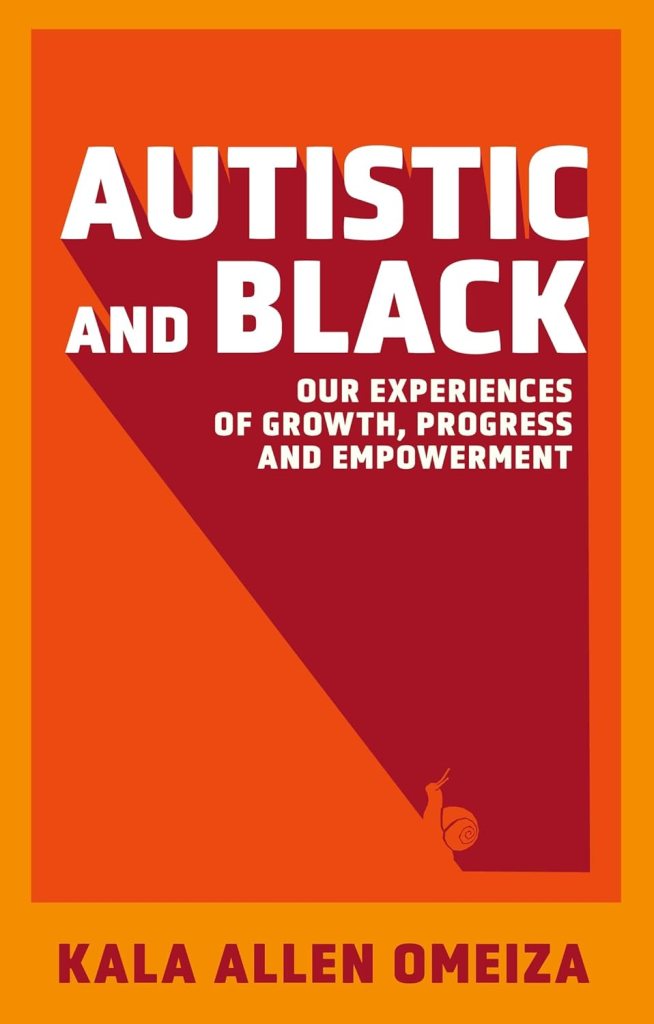
Allen Omeiza, K. (2024). Autistic and Black: Our experiences of growth, progress and empowerment. Jessica Kingsley Publishers.
Kala Allen Omeiza is a late-diagnosed Black autistic writer and an expert in the mental health field. She has worked on mental health research projects at Harvard, Duke, and Oxford, and her works include Afrotistic and The Worst Saturday Ever. In Autistic and Black, Omeiza has collected the stories of black autistic individuals from diverse backgrounds and presents them to us in three parts. Growth, Progress, and Empowerment (Autastic, n.d.).
Black Autistic individuals are more likely to be misdiagnosed and subject to violence and brutality due to their autistic traits than their non-Black Autistic peers.
This book may be of interest to recently diagnosed Black autistic adults seeking community, shared experiences, connection, and validation within the unique context of being Black and Autistic. It may also be of interest to recently diagnosed autistic adults who are not Black, but wish to gain a better understanding of the unique struggles and experiences of Black individuals in the autistic community.
Organized into three parts with chapters. There is a table of contents and an introduction.
This book was found through the Rebecca Crown Library online catalogue using the advanced search option with the search terms autistic AND Black.
This site may be of interest to autistic people, their families, educators, and policymakers who want reliable resources and community support centered on autistic self-advocacy and social justice. ASAN is led by autistic people and focuses on disability rights and inclusion.
Visitors will find a well-organized website with regularly updated content created by autistic activists and experts. The main site does not sell products and keeps its focus on advocacy and education. While information is trustworthy and often cited in research and community discussions, not all pages include formal citations.
This source was found through a Google search for “autism online resources.”
Autism Research Institute. (n.d.). Autism Research Institute.
The Autism Research Institute (ARI) is a nonprofit organization dedicated to autism research, education, and community support. Their website provides research summaries, webinars, parent-focused resources, and information about various treatment approaches.
The site is organized with clear sections for research updates, educational content, and upcoming events. Information is kept current, with publication and event dates clearly noted. ARI’s mission is educational rather than commercial, offering free resources to the autism community. Content is generally reliable and includes citations or references when applicable.
This source was located via a web search for “Autism Research Institute” and cross-checked through autism research resource listings.
This source was found through a Google search using the terms “autism online resources.”
The Autism Society was founded by Bernard Rimland, Ph.D. and Ruth C. Sullivan, Ph.D. in 1965 as a grassroots organization dedicated to serving the autistic population. Today, The Autism Society is headed by a board of directors whose credentials span scientific and medical careers to the lived experiences of care givers and members of the autistic community. In addition to the board of directors, they are advised by a Council of Autistic Advisors and a Panel of Professional Advisors.
The Autism Society seeks to provide resources, education, and community to autistic individuals and their families. They engage in advocacy and support public policy initiatives, especially those that create greater access to employment for autistic individuals and are a valuable resource for autistic individuals seeking to be connected to services, support, and community.
This website is organized in a standard format with a sticky horizontal menu at the top of the page. The landing page itself is visually busy though not entirely overwhelming. It has an up-to-date copyright as of 2025.
The Autism Society presents themselves as centered on the lived experiences of autistic individuals and has an extensive set of oversite committees that seems to support this. They primarily use person first language and stress the importance of the autistic persons right to autonomy. While they do provide some paid services, including corporate training, their focus remains strongly on its free resources, outreach, and advocacy.
The statistics and data presented on this site are generally accompanied by verifiable references.
This source was found via a Google search for “autism online resources.”
The Autism Books by Autistic Authors Project is a collection of books of all genres and types written by or contributed to by autistic individuals. This website is a grassroots project run by a single anonymous autistic individual intending to add value to autistic spaces. It began as a personal collection by the creator as they began looking for resources authored by the “Actually Autistic.” As the creator is anonymous, this resource lacks complete credibility; however, the materials presented on the site are verifiable, and the list is more comprehensive than many others. It also adds credibility within the autistic community that the creator is self-disclosed as autistic. These books are written by autistic individuals, and many of them are about autism and the autistic experience. It includes books on autism, fiction, non-fiction of other subjects, poetry, short stories, and academic books. This source is intended to be used to find books, both on autism and recreational, written by autistic authors, so that firsthand voices have a chance to speak out on their lived experiences and autistic voices can be celebrated. The landing page includes three featured pages: 2025 Book Releases, Nonspeaking Authors, and BIPOC Authors, as well as a list of topics to choose from or a list of publication years to choose from. It is very simple and easy to navigate. Each topic page is organized as a gallery of cover images that link to an outside, unaffiliated source where the book can be purchased. Content is up to date and includes pending 2026 releases. The site was last updated on August 3rd, 2025. The creator transparently discloses that they include authors who are both formally diagnosed and self-diagnosed and that they consider self-diagnoses valid. Books contained in the collection must mention in the description or summary information that the author is autistic to be included, but claims of autism are not vetted. The creator discloses that they attempt to weed out AI-generated work but acknowledges that that’s a difficult, if not impossible, process. There may be some AI-generated work included in this collection as a result. The site is not intended to sell anything. The books contained within this collection are linked to valid, unaffiliated sources that confirm the works are truly published and that the authors are self-identified as autistic. This is a collection intended for informational and ready reference purposes only and as such does not include citations or references. This resource is primarily intended for anyone in the autistic community looking for written work created by other autistics, but also for a wider audience to combat the notion that autistic individuals can’t write publishable works. I conducted a Google search for “autistic authors.”
Autistic Women & Nonbinary Network. (n.d.). Resource library.
The Autistic Women & Nonbinary Network (AWN) is a nonprofit founded in 2010 that advocates for and supports autistic women, marginalized genders, and nonbinary individuals. Their resource library offers a variety of free materials and webinars focusing on autism and social justice.
Newly diagnosed autistic adults may find the late-diagnosed welcome packet especially helpful. Among other resources, the site includes the Autistic Women’s Health Provider Survey Results, which lists recommended gynecologists across multiple regions in North America and Germany.
The AWN board includes prominent activists such as Morénike Giwa Onaiwu, noted for her public speaking and publications featured by major media outlets like The New York Times and NPR. The website is cleanly designed with clear sections and a straightforward horizontal menu for easy navigation.
Content is current, with a copyright date of 2025. The information is reliable and can be corroborated by other disability advocacy sources. Some data/statistics are supported by references or links, but not all.
This source was found through a Google search using the terms “autism online resources.”
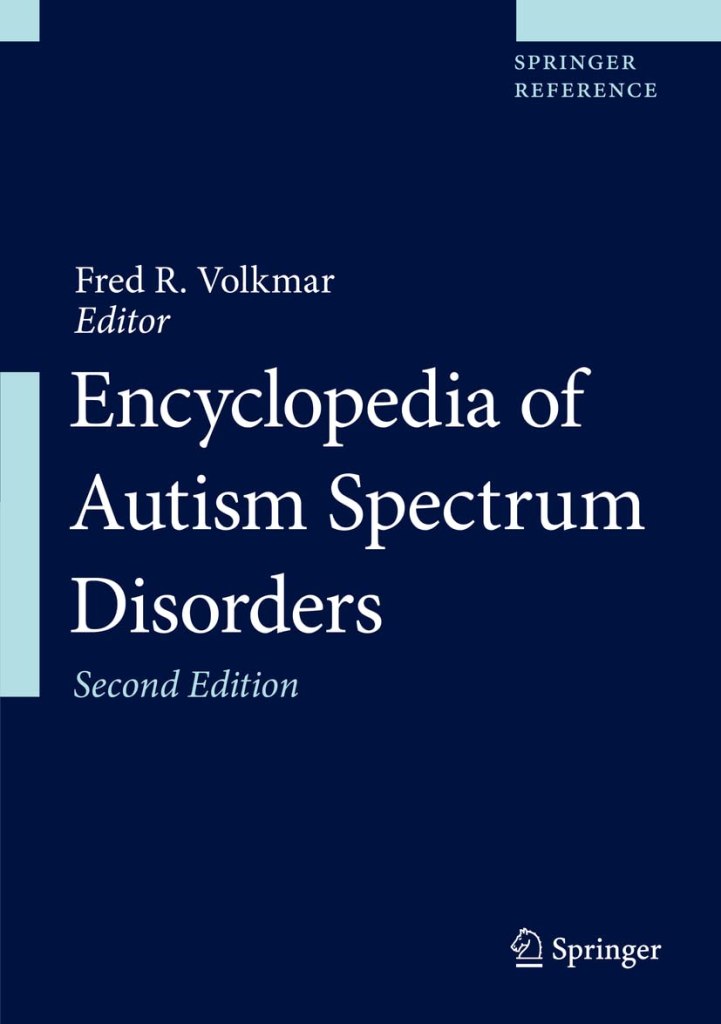
Volkmar, F. R. (Ed.). (2021). Encyclopedia of autism spectrum disorders. Springer.
The editor of this encyclopedia, Volkmar, F. R. is a subject matter expert on autism spectrum disorder and Irving B. Harris Professor of Child Psychiatry, Pediatrics, and Psychology at the Yale University Child Study Center, School of Medicine. He has authored numerous works on the subject, including the autism section of the DSM-IV.
This reference book is a complete encyclopedia of autism spectrum disorders, past and present, their associated research, evaluation methods, treatment options, and beyond.
This source is an excellent place to begin research into autism as a medical diagnosis, treatment options, common challenges, common and uncommon symptoms, and more.
In its online form this encyclopedia is searchable and separated into articles listed in a table of contents that is currently 3475 entries long. Its list of editors and contributors spans 81 pages. While a physical copy is available, the online encyclopedia is continually updated with the latest research on autism spectrum disorders.
Each article includes author and editor information, the chief editor of the encyclopedia being Volkmar, and a full list of references. A quick search of ‘adults’ in the encyclopedia returns numerous sections including but not limited to adult assessments, adult camouflaging (masking), employment, mental health challenges, and suicide rates.
This reference work is intended for a broad range of multidisciplinary audiences ranging from medical professionals to parents caring for autistic children.
This resource was found using the Book Index with Reviews database with the search term, Volkmar, F. R. in the Author field.
American Psychiatric Association. (2022). Diagnostic and statistical manual of mental disorders: DSM-5-TR (M. B. First, Ed.). American Psychiatric Association Publishing.
The DSM V – TR is the official diagnostic manual of mental disorders for medical professionals in the U.S. It outlines the full diagnostic criteria for all recognized mental disorders as specified by the American Psychological Association and represents the medical consensus on mental disorders, including autism spectrum disorder. Patients must meet these criteria to be diagnosed with Autism in the United States.
This is the ultimate source on what it means to be diagnosed with autism spectrum disorder from a medical standpoint. Useful for individuals seeking more information on the diagnostic criteria of ASD both before and after diagnosis.
This resource includes a table of contents and an introduction. It is separated into easily located sections.
This is a standard reference text available for viewing in most libraries.
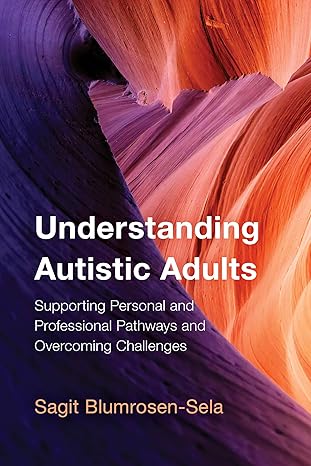
Blumrosen, S. (2024). Understanding autistic adults: Supporting personal and professional pathways and overcoming challenges. Rowman & Littlefield.
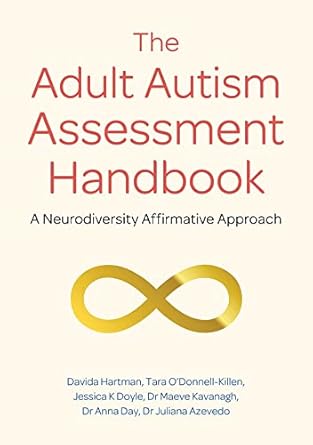
The adult autism assessment handbook: A neurodiversity affirmative approach covers a range of topics for diagnosticians including neuro-affirmative language, current adult autism assessment guidelines, and accessibility considerations.
This handbook was written by 6 accomplished experts in the field of psychology specializing in autism. The authors represent both neurotypical and neurodivergent identities. This source uses identity first language and strongly advocates for its use over person first language as an aspect of neuro-affirming care.
While primarily intended for clinicians conducting neuro-affirming adult autism diagnostic screenings, this book may be of interest to late diagnosed/pre diagnosed autistic adults who want to gain a greater understanding of diagnostic criteria from a neuro-affirming perspective.
This handbook is organized into sections with distinct chapter headings. It contains an easy to navigate table of contents, acknowledgments, and an introduction. Chapters include further reading recommendations on the subjects covered.
This source was found through the Rebecca Crown Library online catalogue using the advanced search feature. Search terms included autism AND adult. Results were filtered for books published in the last 5 years.
Blumrosen, S. (2024). Understanding autistic adults: Supporting personal and professional pathways and overcoming challenges. Rowman & Littlefield.
S. Blumrosen is known for autism advocacy and research that centers on autistic adults’ experiences. This book explores personal growth, workplace challenges, social relationships, and ways to find empowerment.
Late-diagnosed autistic adults and those that support them, including their healthcare providers, may find this book helpful as they navigate personal and professional life.
The book is organized into chapters and includes real-life stories, practical tips, and references. It has a clear table of contents for easy navigation.
This resource was found through the Book Index with Reviews database by searching “autistic adults.”
National Institute of Mental Health. (n.d.). NIMH data archive (NDA). National Institutes of Health. https://nda.nih.gov/
The National Institute of Mental Health Data Archive (NDA) is a comprehensive collection of mental health research data collected by the U.S. government, primarily meant to enhance ongoing research and provide summary data to the public. The NDA primarily contains anonymous human data from mental health research that has been normalized to a set standard. As a facet of mental health research, this resource houses government-collected data on autism and initially began as a database exclusively dedicated to autism research. This source may be used to find the most up-to-date government-sponsored research on autism and as a convenient source for a large archive of past research studies.
The database has both basic and advanced search options on its landing page, though the advanced search consists of filtering options only. Searches can be filtered by type, including NDA studies, publications, collections, data structures, data elements, and experiments, as well as by site, such as the NIMH Data Archive and the Adolescent Brain Cognitive Development Study. Users cannot set additional limits beyond these. Faceted searching is available; however, the facets are identical to the filter-by-type options. The content is updated biannually, though its coverage range is not entirely transparent, it is presumably up to the last submission deadline of July 15th, 2025.
Content available to the public is abstracted and indexed only with links to any associated peer-reviewed research papers published in scientific journals such as Nature, Molecular Autism, Biological Psychiatry, and the Journal of Autism and Developmental Disorders. Content available to qualified government-sponsored researchers consists of anonymous, harmonized human subject datasets. There is no mechanism to sort material according to format, relevance, or date, making it somewhat difficult to use. Users cannot save to a temporary folder for printing or emailing. Account creation is restricted to verified research scientists and institutions.
The intended audience for this resource is research scientists in the mental health field; the data is restricted to verified researchers, with some limited access consideration given to the public. I conducted a preliminary Google search for “autism databases” and came across this database.
American Psychological Association. (n.d.). APA PsycInfo.
APA PsycInfo is a comprehensive database providing abstracts and citations for peer-reviewed literature in psychology and related disciplines. It covers journal articles, books, dissertations, and more, focusing on mental health, behavioral sciences, and related fields. This resource is essential for professional and nonprofessional research into autism spectrum disorder and related mental health topics.
The database offers both basic and advanced search options, allowing users to apply limits such as publication date, methodology, and population. Faceted searching helps narrow results by type, subject, and more. APA PsycInfo covers content spanning approximately 600 years, including historical works that predate modern psychology. While primarily indexing and abstracting content, it links to full-text sources when available. Users can sort results by relevance or date, save searches, and create personal accounts to manage research folders. The intended audience includes researchers, clinicians, and students in psychology and allied fields.
This source was found through the Rebecca Crown Library’s database A-Z list using the search term “APA”
American Psychological Association. (n.d.). APA PsycArticles.
APA PsycArticles is a full-text database featuring peer-reviewed articles published by the American Psychological Association. It covers psychology and related disciplines with an emphasis on behavioral science research relevant to autism and mental health.
Search functions include basic and advanced options with multiple filters such as publication date and topic. Faceted searching allows refinement by article type and methodology. Coverage spans from 1894 to current publications, with frequent updates. All content is full-text, with tools for sorting, saving, and exporting citations. Users may create accounts for personalized features. The database is intended for academic researchers, clinicians, and graduate students.
This source was accessed via the university’s research portal using search term “APA.”







 J.M.
J.M. 